Theo Dimitrasopoulos
  • Home
  • Projects (current)
  • Other
  • Blog

Quant Projects

Derivatives pricing, portfolio construction, machine learning, and market microstructure — every project ships with reproducible code, honest benchmarks, and an interactive dashboard.
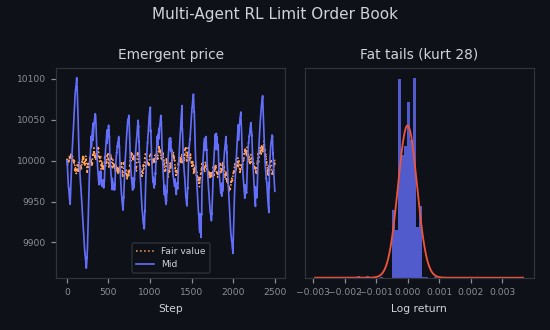
Emergent price path and fat-tailed return distribution from a multi-agent order-book simulation

Multi-Agent RL Market Simulation
Market Microstructure — A pure-Python continuous double-auction order book populated by market makers, momentum traders, value investors and noise traders trained with Independent PPO; fat tails (kurtosis ~25) and volatility clustering emerge endogenously, pulling all market makers triggers a flash crash (spread ~17x), and a short-selling ban is shown to worsen price discovery — with the candid finding that letting every agent learn selfishly degrades the public good of price discovery.

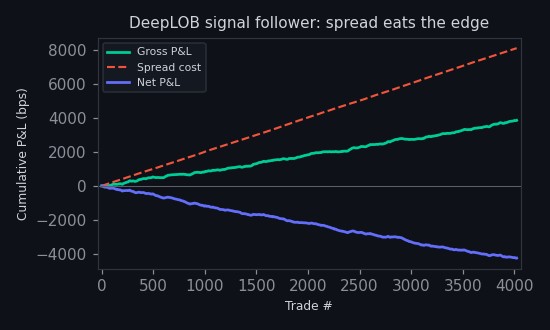
DeepLOB signal-follower gross P&L overtaken by cumulative spread cost, leaving net P&L negative

Deep Learning for Limit-Order-Book Prediction
Machine Learning — Logistic regression, a 1D-CNN, an LSTM and the DeepLOB architecture predict short-horizon mid-price direction from the 40-feature LOB matrix under a strict no-leak temporal split, benchmarked against queue imbalance with three-class precision/recall; the directional edge is real (60% hit rate, positive gross P&L) but a cost-aware backtest shows it does not survive the bid-ask spread (net −4,242 bps).

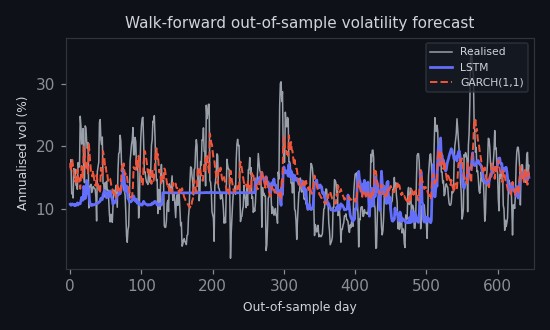
Walk-forward LSTM volatility forecast tracking realised vol against the GARCH baseline

Deep Learning for Financial Time-Series Forecasting
Machine Learning — A multi-layer LSTM and a multi-head-attention Transformer forecast realised volatility and return direction under strict walk-forward validation with no-leak feature engineering; scored honestly against GARCH(1,1), EWMA and momentum with QLIKE and Mincer-Zarnowitz, plus overfitting, regime and permutation diagnostics — the LSTM carries genuine signal (permutation p < 0.001) yet still does not beat a two-parameter GARCH.

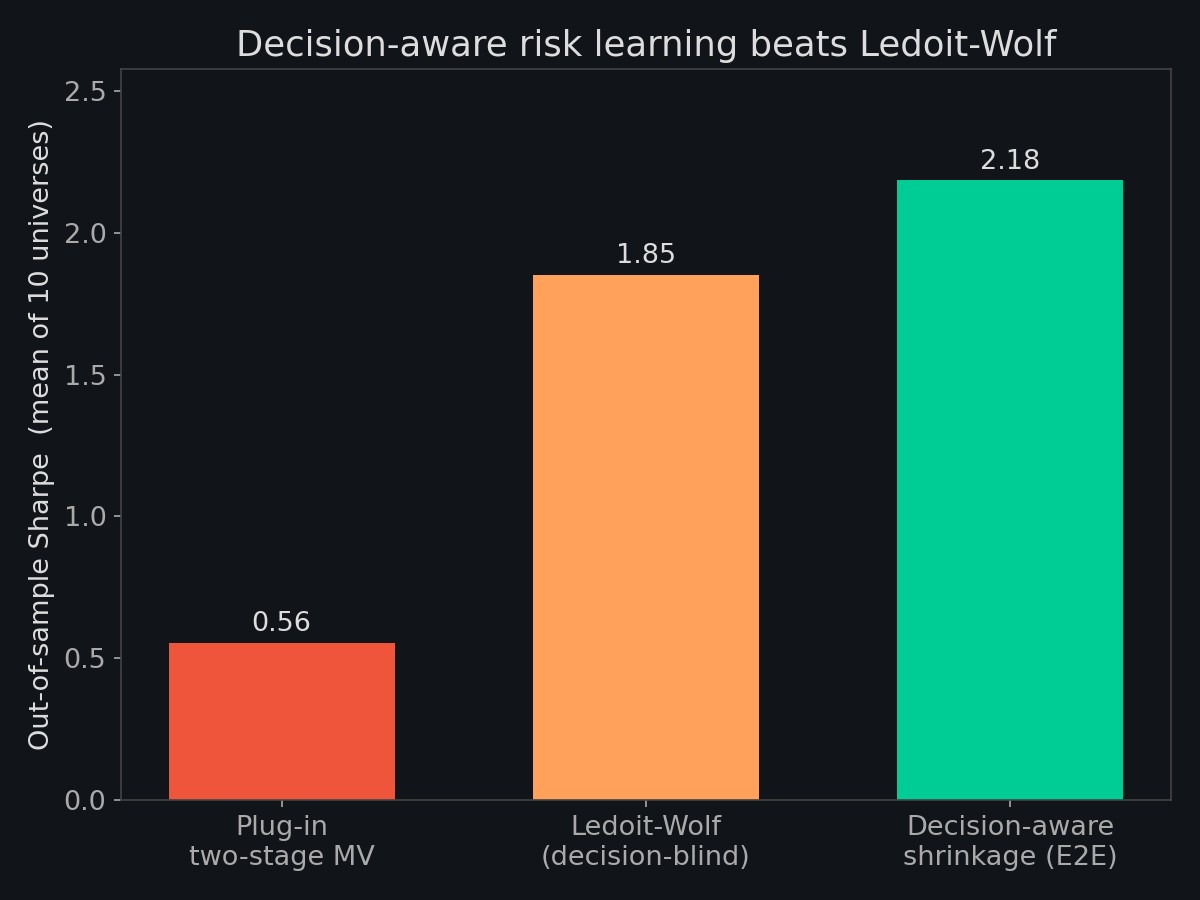
Out-of-sample Sharpe of plug-in, Ledoit-Wolf, and decision-aware shrinkage portfolios

End-to-End Differentiable Portfolio Optimisation
Portfolio Construction — A mean-variance quadratic program embedded as a neural-network layer via cvxpylayers, so a decision-quality Sharpe loss back-propagates through the optimiser into the return-and-risk prediction head by implicit differentiation of the KKT conditions; controlled experiments test the SOTA claim honestly and locate the decision-aware edge in the risk model — a learned covariance shrinkage that beats even Ledoit-Wolf out-of-sample.

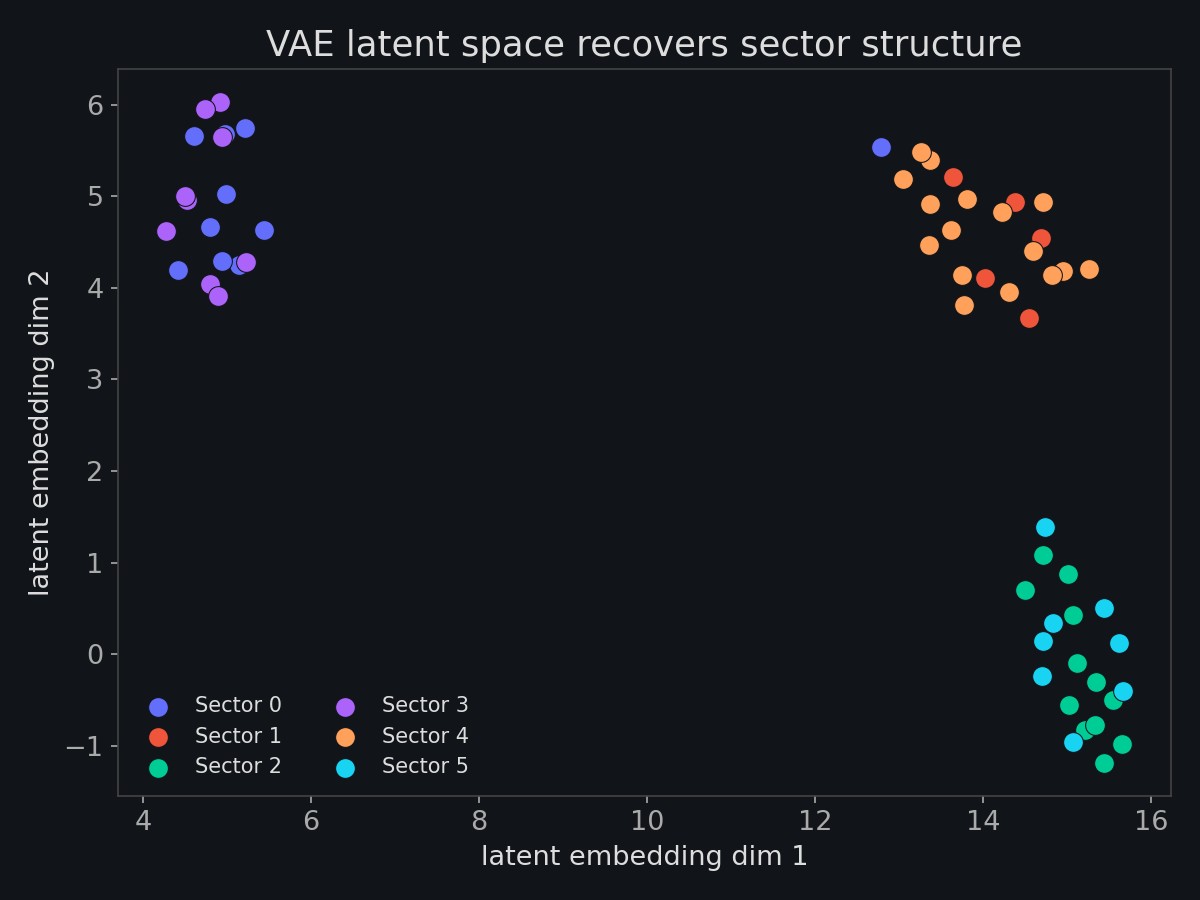
Stocks embedded in the VAE latent loading space, clustered and coloured by sector

Variational Autoencoder Factor Model
Machine Learning — A VAE trained on the daily cross-section of returns learns probabilistic data-driven factors; the leading latent dimension rediscovers the market (correlation 0.91), the reconstructed covariance is benchmarked against PCA and Ledoit-Wolf in an out-of-sample minimum-variance test, high reconstruction error flags idiosyncratic drawdowns, and a conditional VAE shifts loadings by macro regime.

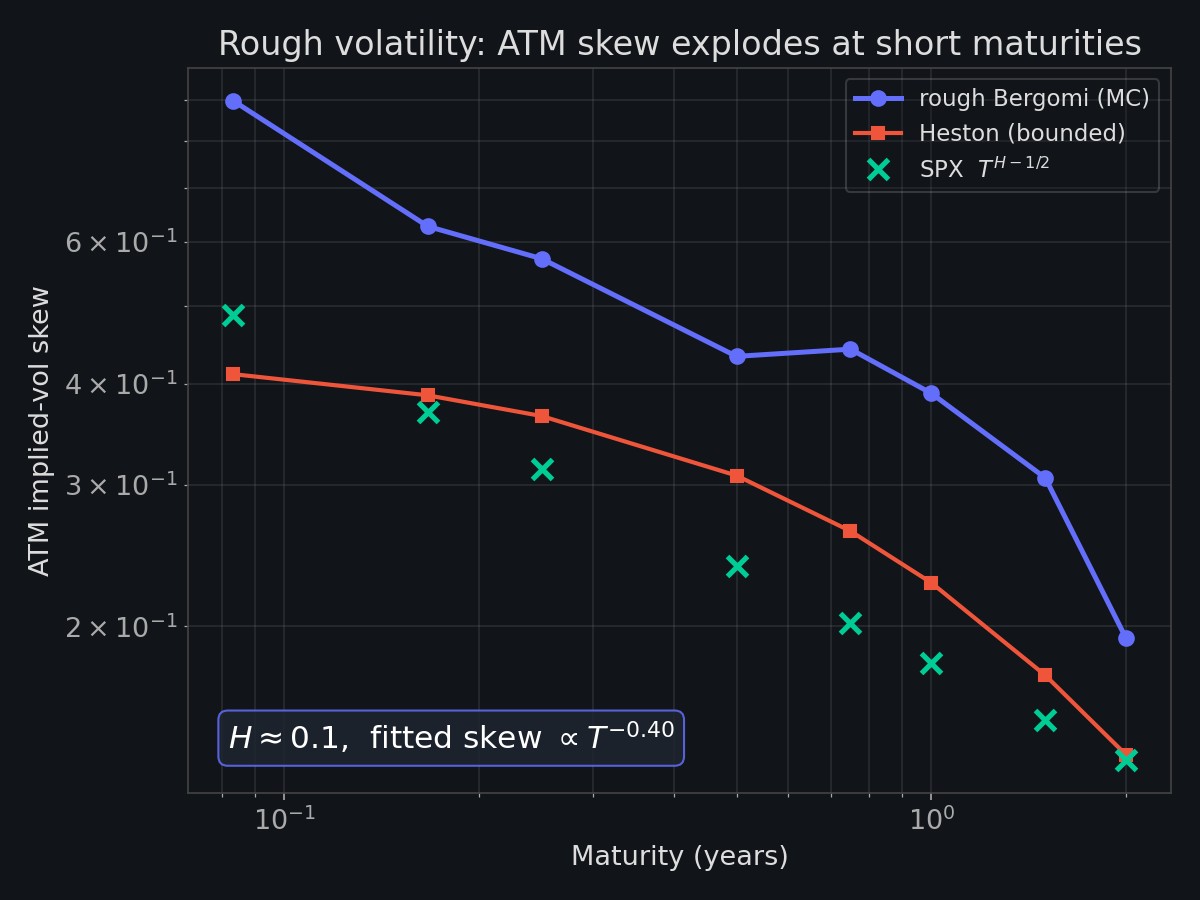
Rough Bergomi ATM skew term structure scaling as a power law against a flat Heston curve

Rough Volatility & Deep Hedging — The Rough Bergomi Model
Volatility Modelling — Fractional Brownian motion sampled exactly by Davies-Harte circulant embedding drives a rough Bergomi variance process with Hurst H near 0.1, reproducing the power-law ATM-skew explosion at short maturities that Heston cannot; the three parameters are calibrated by simulation-based gradient descent, and a PyTorch LSTM deep-hedging agent trained on simulated paths beats Black-Scholes and model deltas, with truncated path signatures as an alternative feature set.

Almgren-Chriss liquidation trajectories and the efficient frontier of execution cost versus risk

Optimal Trade Execution — Almgren-Chriss and Reinforcement Learning
Market Microstructure — The Almgren-Chriss closed-form trajectory minimises expected implementation shortfall plus a risk-aversion-weighted variance, tracing an efficient frontier from TWAP-like liquidation to aggressive front-loading; market-impact parameters are calibrated from intraday data, and a PyTorch PPO agent trained in a gymnasium execution environment learns to deviate from the static schedule on intraday momentum and volume, outperforming AC, TWAP, and VWAP under non-stationary impact.

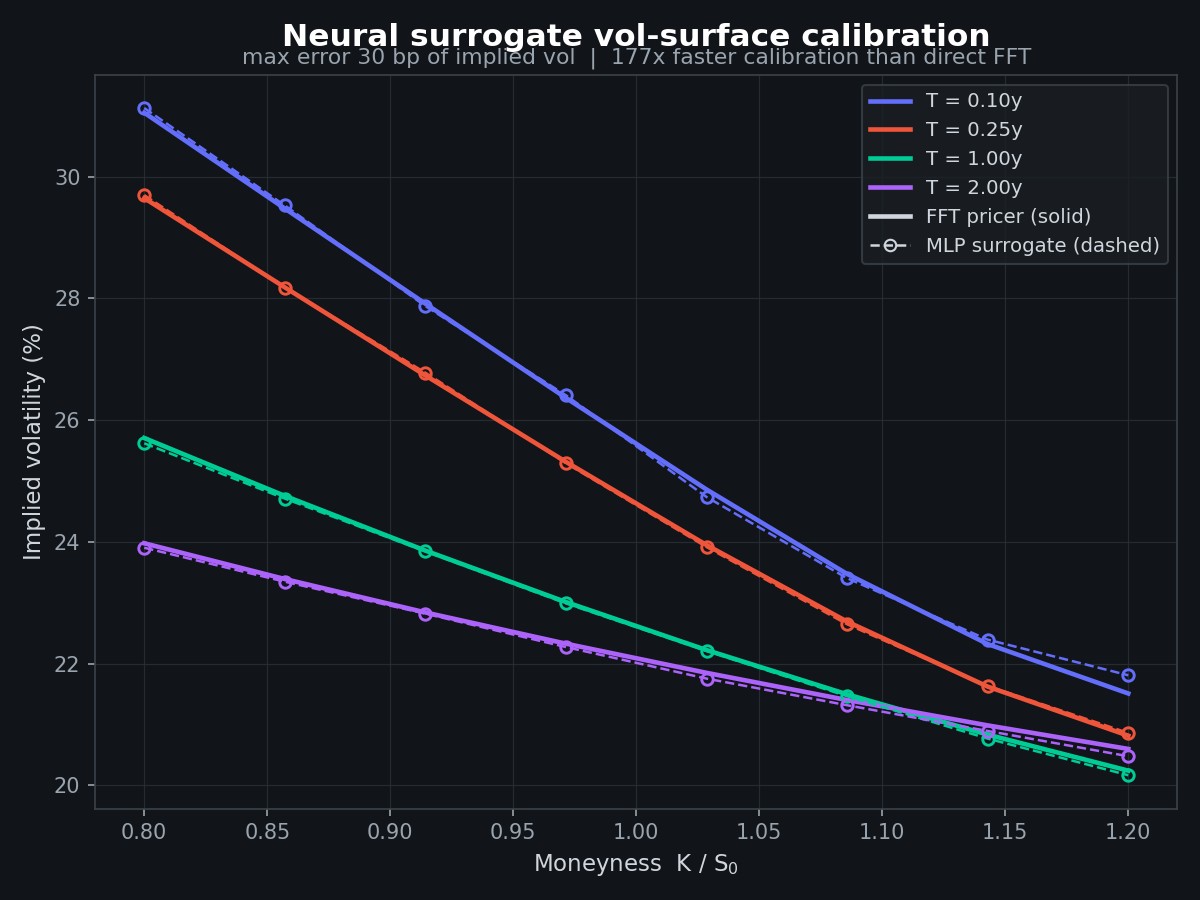
Heston implied volatility smiles from the FFT pricer overlaid with neural surrogate predictions

Deep Learning Volatility — Neural Surrogate Calibration
Machine Learning — A feedforward network trained on 30,000 Latin-hypercube Heston surfaces learns the map from model parameters to the full implied-vol surface, cutting calibration from a second of repeated FFT solves to six milliseconds; no-arbitrage penalties shape the loss, autograd supplies Greeks for a minimum-variance hedging study, and Dupire local volatility is extracted from the fitted parameters.

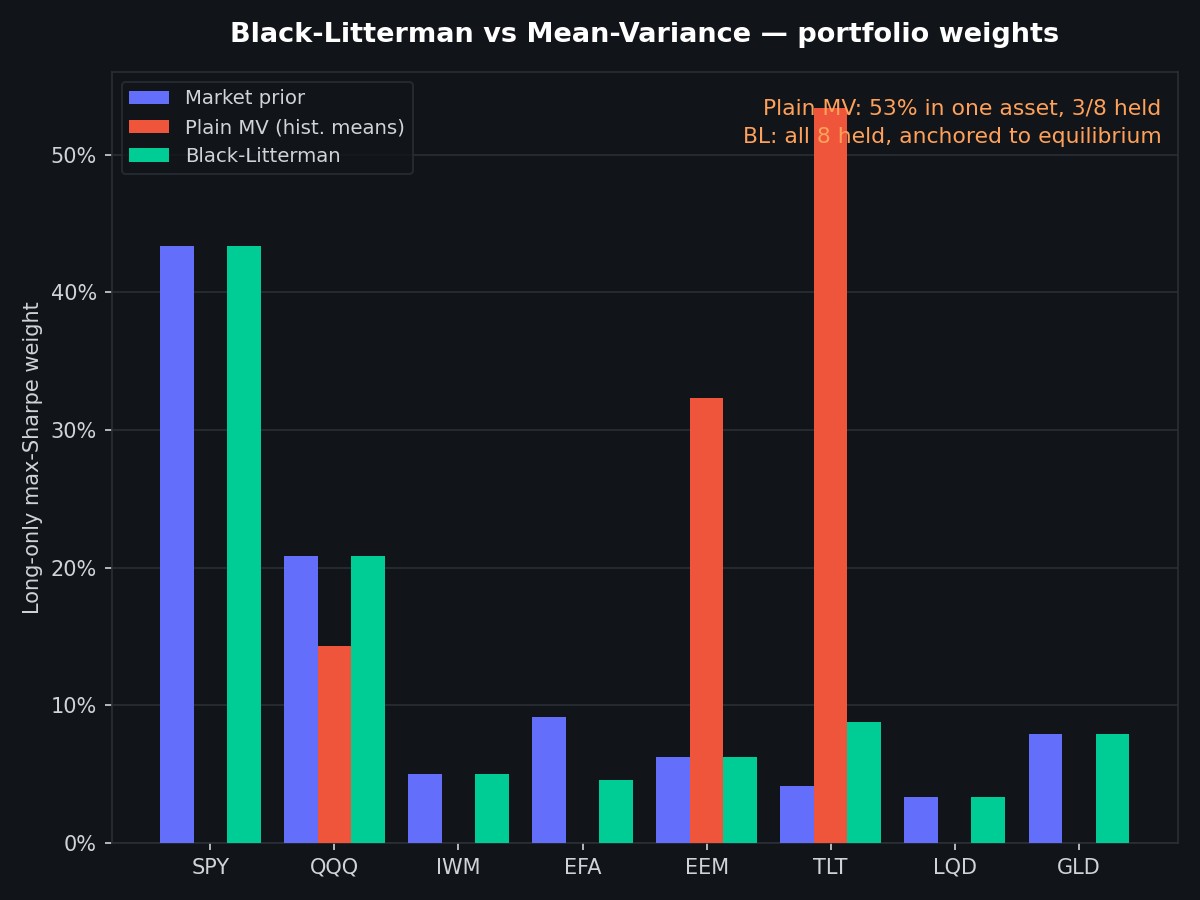
Portfolio weights compared across market equilibrium, plain mean-variance, and Black-Litterman

Bayesian Asset Allocation — The Black-Litterman Model
Portfolio Construction — Reverse-optimised market-cap weights yield the implied equilibrium return vector, investor views enter as a normal distribution over linear combinations of assets with Idzorek confidence mapping, and the Bayesian posterior feeds a constrained mean-variance step — producing stable, diversified weights without ad hoc constraints, validated against the published He-Litterman 1999 results and a rolling out-of-sample backtest.

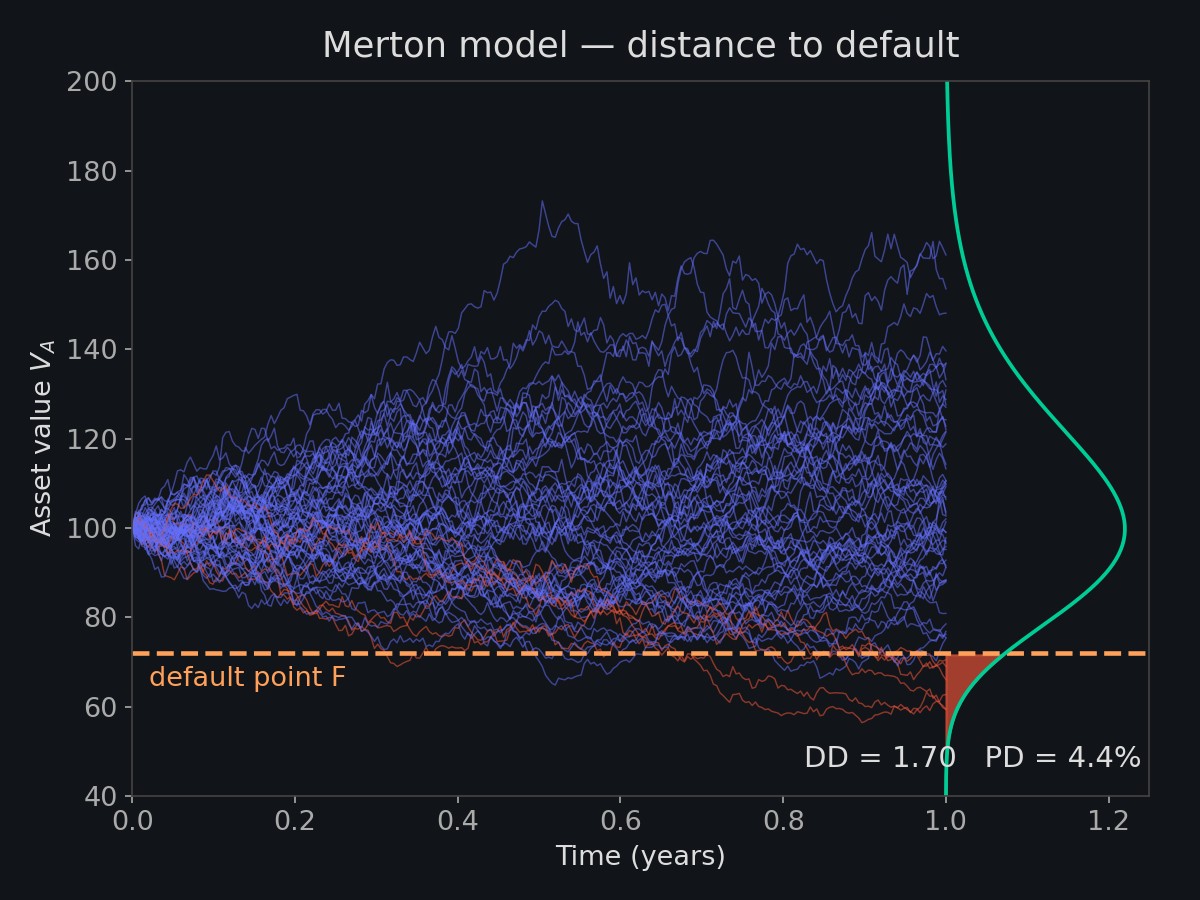
Merton model asset paths against the default barrier with terminal distribution

Structural Credit Risk — The Merton Model
Credit Risk — Equity treated as a call option on firm assets: a fixed-point solver backs out unobservable asset value and volatility from market cap and equity vol, yielding distance-to-default, risk-neutral default probability, model-implied credit spreads benchmarked against CDS, and the KMV mapping from DD to empirical default frequency.

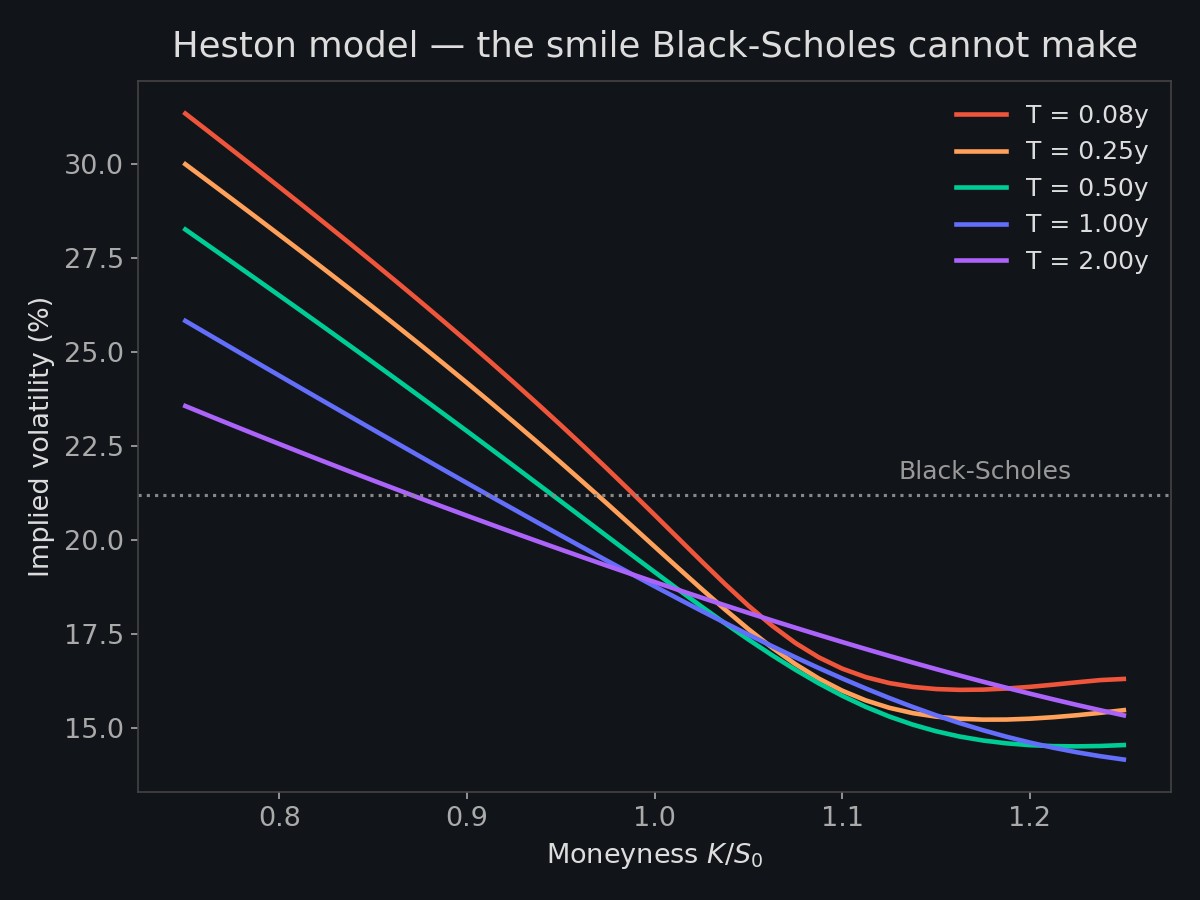
Heston implied volatility smiles across maturities versus flat Black-Scholes

Stochastic Volatility — Heston Pricing Engine
Derivatives Pricing — Semi-closed-form option pricing via the Heston characteristic function and Carr-Madan FFT, calibration of all five parameters to a live option chain in seconds, reproduction of the implied vol smile and skew, Feller condition diagnostics, and full-truncation Euler Monte Carlo for path-dependent payoffs.

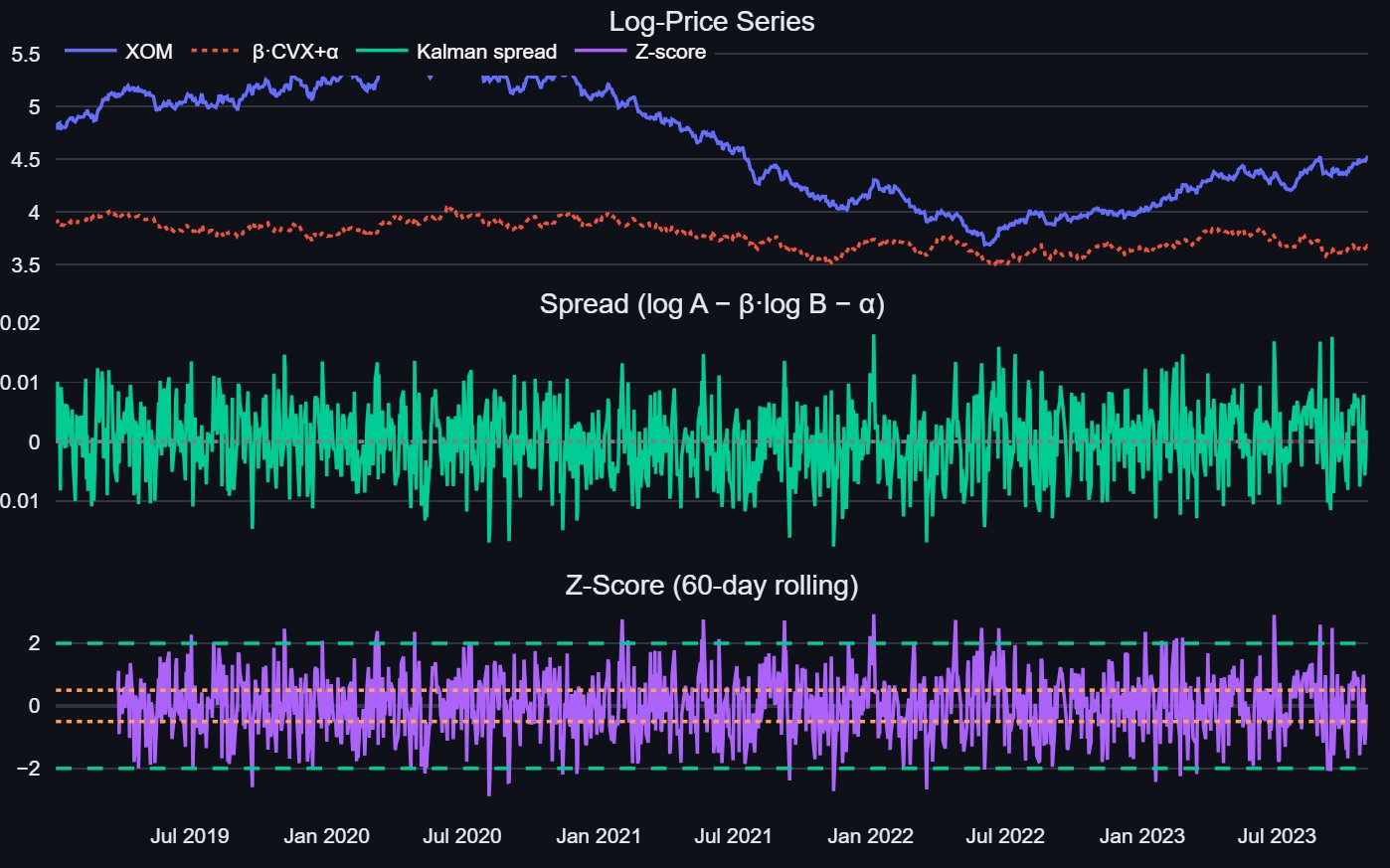
Pairs trading cointegration spread and equity curve

Statistical Arbitrage — Pairs Trading via Cointegration
Quantitative Trading — Engle-Granger and Johansen cointegration tests screen equity pairs for stationary spreads; an Ornstein-Uhlenbeck process quantifies mean-reversion speed and half-life; a Kalman filter replaces the static OLS hedge ratio with a dynamic estimate that adapts to structural drift; z-score signals drive a backtested long-short strategy with transaction costs.

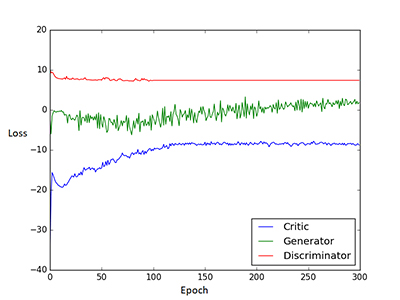
GAN scenario generation visualization

Scenario Generation using Generative Adversarial Networks
Bank of America Securities — WGAN-GP trained on cross-asset log returns to learn the empirical joint distribution; benchmarked against historical simulation and parametric bootstrapping across tail diagnostics, correlation structure, GARCH persistence, PCA alignment, and portfolio VaR coverage.

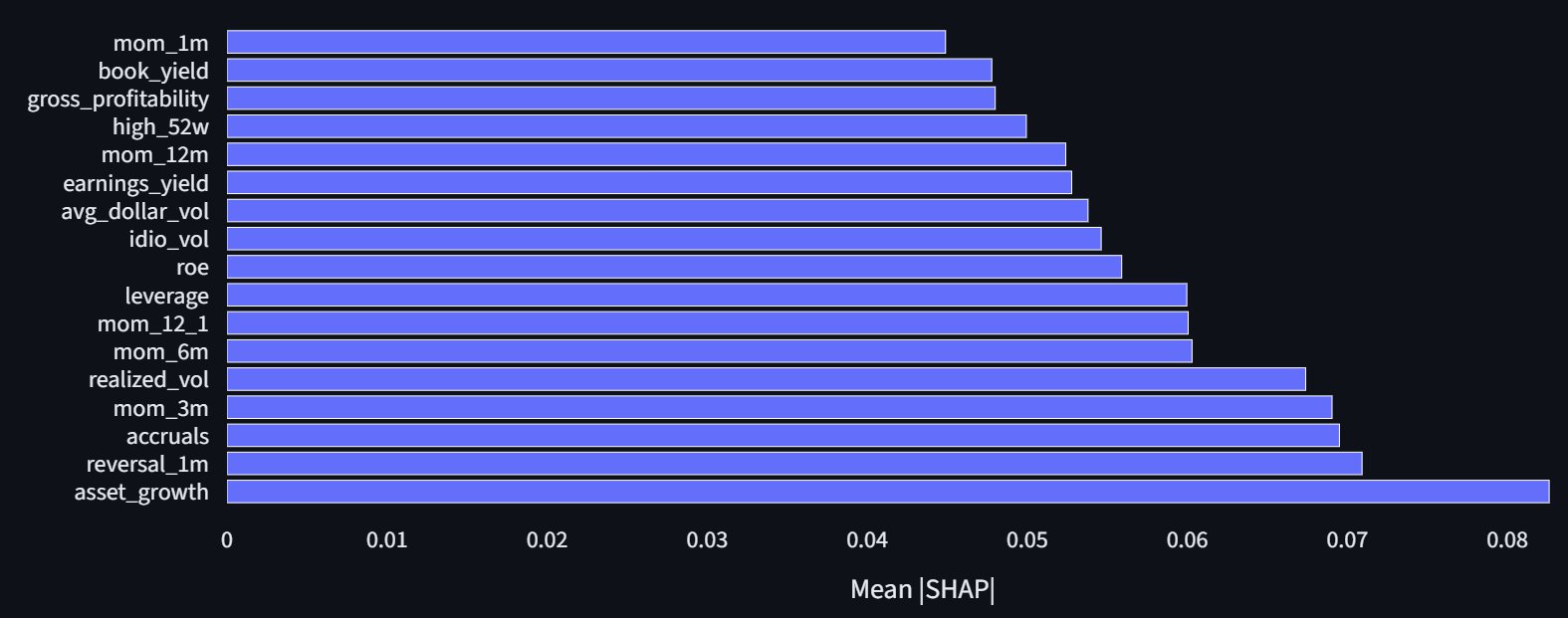
GBM Alpha rolling SHAP importance and long-short equity curve

Gradient Boosting Alpha
Machine Learning — XGBoost and LightGBM ensemble trained on 18 fundamental, momentum, and liquidity factors to predict cross-sectional stock returns, with SHAP attribution, walk-forward validation, decile portfolio construction, and signal decay analysis.

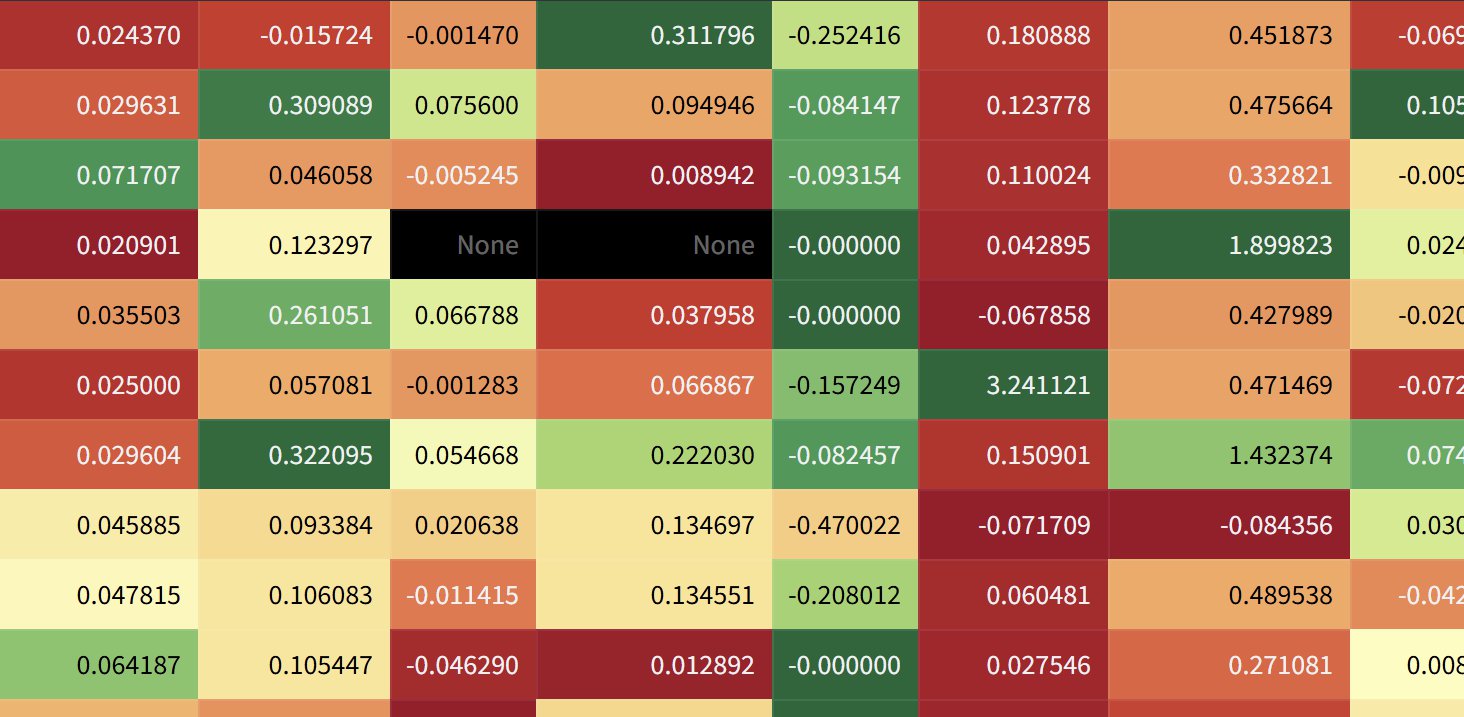
Cross-sectional factor signals IC heatmap and spread returns

Cross-Sectional Signals Engine
Factor Research — SEC EDGAR fundamentals combined with price data to engineer equity factor signals (value, quality, momentum, accruals), rank stocks into deciles, and evaluate IC and long-short spread performance with a Streamlit dashboard.

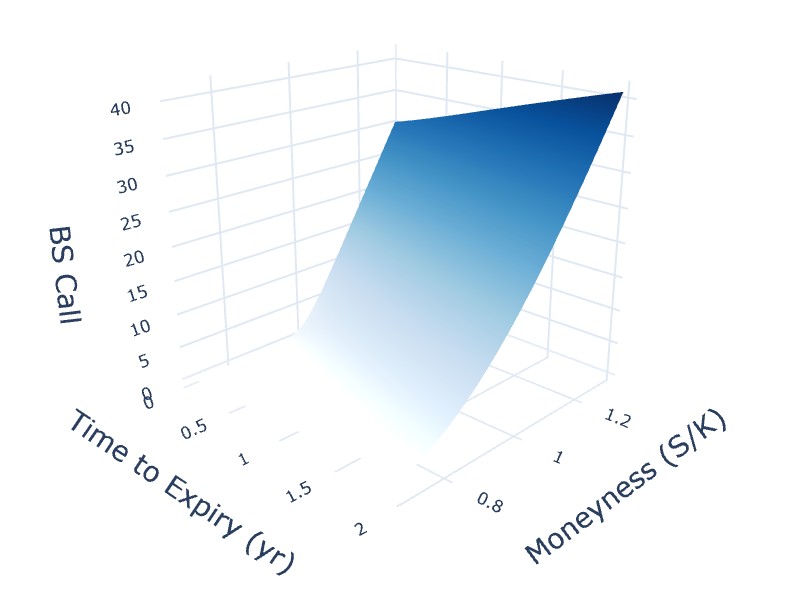
Options pricing surfaces and Greeks dashboard

Vanilla Options Pricing — Black-Scholes, Binomial Tree, and Greeks
Pricing & Hedging — Black-Scholes and CRR binomial tree from scratch, full Greeks set (delta, gamma, vega, theta, rho), pricing and Greek surfaces across moneyness and expiry, scenario P&L attribution, and an interactive Streamlit dashboard.

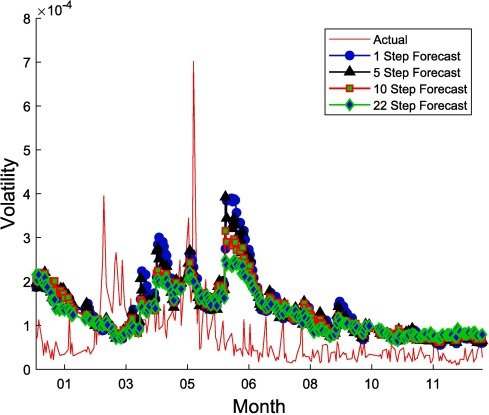
Conditional volatility and regime map chart

Conditional Volatility Forecasting
Time Series — Modelling and forecasting conditional volatility with EWMA and GARCH(1,1) benchmarked against rolling historical vol across multiple horizons, with a three-state regime detector and a Streamlit dashboard.

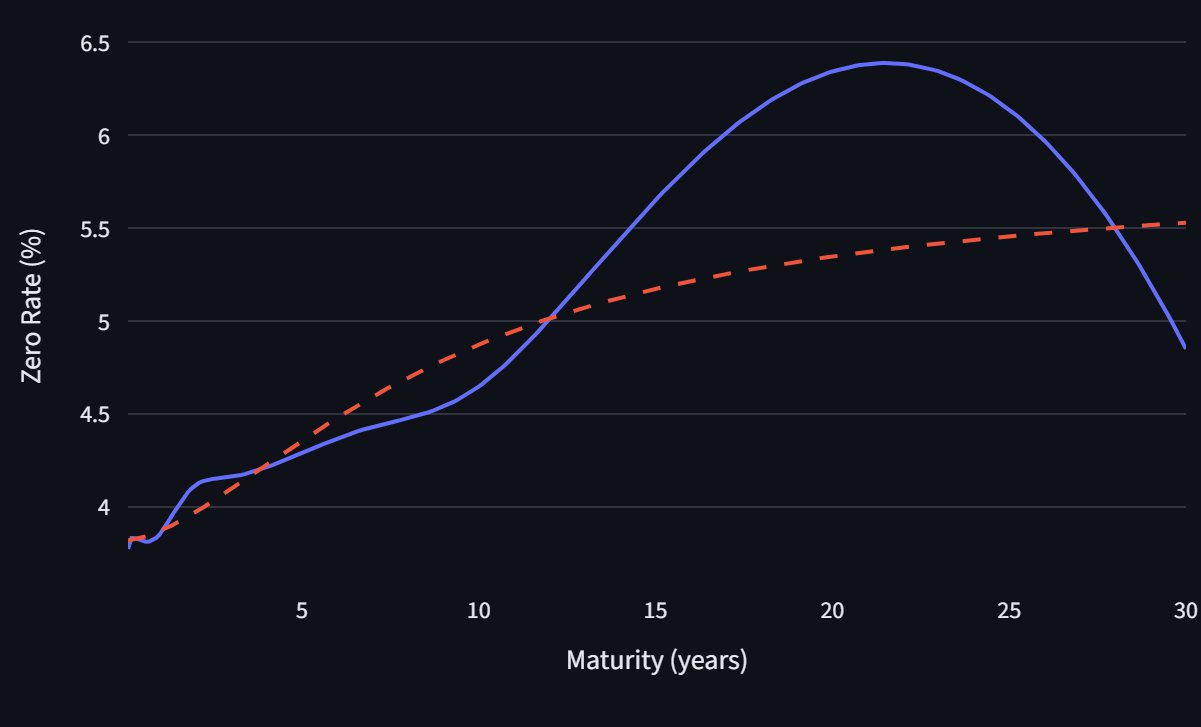
US Treasury yield curve bootstrap and shock scenarios dashboard

Yield Curve Explorer
Fixed Income — Bootstrap zero-coupon term structures from US Treasury CMT data, compare interpolation methods, fit Nelson-Siegel models, price fixed-rate bonds, and stress-test with rate shock scenarios using a Streamlit dashboard.

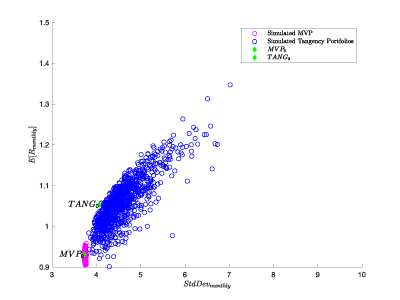
Efficient frontier portfolio chart

Mean-Variance Efficient Portfolios
Portfolio Optimization — Constructing and visualizing the efficient frontier using mean-variance optimization, with analysis of minimum variance and maximum Sharpe ratio portfolios.

Portfolio Risk Engine

Portfolio Risk Engine
Risk Analytics — A Python CLI computing rolling volatility, Value at Risk, CVaR, stress tests, Kupiec backtesting, and factor decomposition for multi-asset portfolios.

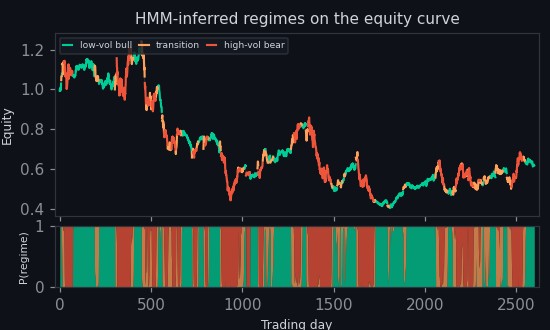
HMM-SVM regime detection chart

Regime Detection using Hidden Markov Models and Support Vector Machines
Machine Learning — Identifying bull and bear market regimes in equity time series using unsupervised HMM and One-Class SVM with a Radial Basis kernel.

Evolutionary neural network training chart

Genetic Neural Networks
Machine Learning — Training neural networks with genetic algorithms to automate buy/sell/hold signals for portfolio management of the Dow Jones Industrial Index.

Global macro portfolio returns chart

Long/Short Global Macro Strategies
Portfolio Optimization — Backtesting systematic long/short portfolios across global macro factors including equities, rates, commodities, and currencies.

Federal Reserve NLP analysis

Predicting Interest Rates from Federal Reserve Documents
Machine Learning — Using NLP, topic modeling, and sentiment analysis on FOMC communications to forecast U.S. interest rate direction.

Asian options Monte Carlo simulation

Asian Options Monte Carlo Pricing
Pricing & Hedging — Monte Carlo simulation methods for pricing arithmetic and geometric Asian options, including variance reduction techniques.

© 2026 Theo Dimitrasopoulos  ·  LinkedIn  ·  GitHub